
How Many Jobs Are Available In Air Freight/Delivery Services? (2026 Data)
Quick Answer
About 1.66 million people work in U.S. air freight and delivery services: roughly 568,500 in air transportation and 1.09 million in couriers and messengers, according to preliminary Bureau of Labor Statistics (BLS) data for September 2026. The BLS also projects steady openings every year through 2035 in the industry’s key roles, including about 16,400 for pilots, 13,100 for aircraft mechanics, and 26,600 for logisticians.
Key Takeaways
- Around 1.66 million U.S. jobs sit in the two industries that make up air freight and delivery: air transportation and couriers and messengers.
- The best-paid roles are airline pilots (median $232,140 a year) and air traffic controllers (median $148,080), based on May 2025 BLS data.
- Logistics is the fastest-growing career in the field. Logistician jobs are projected to grow 18% from 2025 to 2035.
- Global air cargo hit a record volume in 2025, but IATA expects growth of only 0.2% in 2026, so hiring is uneven across employers.
- Not every company is adding staff. UPS cut 48,000 jobs in 2025 and plans up to 30,000 more cuts in 2026.
- Many entry-level roles, such as package handler, ramp agent, and delivery driver, need only a high school diploma or less.
It’s tricky to give an exact, real-time count of how many jobs are available in air freight/delivery services, because openings change every day. What we can do is look at the latest government and industry data to see how big the workforce is, which jobs are growing, and what they pay.
The air freight and delivery services industry moves goods around the world by plane and delivers them to homes and businesses. Online shopping and fast-delivery expectations keep demand high, although 2026 has brought a more mixed hiring picture than the boom years. This guide covers the numbers, the best-paying jobs, the qualifications you need, and how to get started.
How Many Jobs Are Available In Air Freight/Delivery Services In 2026?
There is no single official count for “air freight/delivery services,” so the most reliable approach is to combine the two closest industries tracked by the BLS. According to the agency’s air transportation industry data, about 568,500 people worked in air transportation (passenger and cargo airlines) in September 2026. Another 1,089,600 worked in couriers and messengers, the category that includes express and parcel delivery companies such as FedEx and UPS. Together that is roughly 1.66 million jobs. Both figures are preliminary.
Open positions come from two sources: new jobs created by growth, and existing jobs that open up when workers retire or change careers. The BLS projects the following average openings each year from 2025 to 2035 in occupations that are central to this industry. These numbers cover each occupation across the whole U.S. economy, not only air freight employers.
- Airline and commercial pilots: about 16,400 openings per year
- Aircraft and avionics mechanics and technicians: about 13,100 openings per year
- Logisticians: about 26,600 openings per year
- Air traffic controllers: about 2,100 openings per year
- Delivery truck drivers and driver/sales workers: about 152,700 openings per year
- Hand laborers and material movers (including package and cargo handlers): about 904,200 openings per year
What Is Air Freight/Delivery Services?
Air freight and delivery services means moving goods and products by air and getting them to their final destination. It includes large cargo planes carrying thousands of items, express parcel services, and the logistics work of planning and tracking each shipment from start to finish.
The industry connects countries and regions so businesses and people receive deliveries quickly and reliably. Air cargo carries everything from raw materials and electronics to temperature-sensitive goods such as fresh food and medicine. Major employers include FedEx, UPS, DHL, Amazon Air, and Atlas Air, along with the cargo divisions of passenger airlines and thousands of freight forwarders.
Is Air Freight/Delivery Services A Good Career Path?
Air freight and delivery services can be a good career path if you like fast-paced work and want a field with a wide range of jobs, from entry-level roles to highly paid licensed professions. It offers solid pay, clear routes to promotion, and skills that transfer across the wider transportation services sector.
Job Stability
People and businesses always need things shipped quickly, so demand for air freight is long-lasting. Skilled, licensed roles such as pilots and aircraft mechanics are especially secure. That said, stability varies by employer and role. UPS eliminated 48,000 jobs in 2025 and announced up to 30,000 more cuts and 24 facility closures for 2026 as it reduces its Amazon delivery volume. Package-handling jobs are also the most exposed to automation, so it pays to build skills that are harder to replace.
Career Advancement
You can start by loading packages and work your way up to team leader, supervisor, or operations manager. Many companies offer tuition assistance and in-house training in areas like route planning, safety, and people management. Workers who add certifications or a degree can move into logistics, dispatch, or management roles with higher pay.
Good Pay
Airline pilots and air traffic controllers are among the best-paid workers in the country, with median pay well above $140,000 a year. Mechanics and logisticians earn around $80,000. Entry-level jobs pay less, but wages rise with experience, shift differentials, and overtime.
Best Paying Jobs In Air Freight Delivery Services
The table below uses the latest BLS data: median annual pay from May 2025, employment in 2025, and projected growth from 2025 to 2035. Figures are national totals for each occupation unless noted.
| Job Title | Median Pay (May 2025) | U.S. Jobs (2025) | Projected Growth (2025–35) | Typical Entry Requirement |
|---|---|---|---|---|
| Airline Pilot, Copilot, Or Flight Engineer | $232,140 | 104,600 | 8% | Bachelor’s degree and FAA airline transport pilot certificate |
| Air Traffic Controller | $148,080 | 24,000 | 2% | Associate’s degree and FAA training |
| Commercial Pilot | $123,220 | 50,400 | 5% | FAA commercial pilot certificate |
| Logistician | $82,320 | 255,100 | 18% | Bachelor’s degree |
| Aircraft Or Avionics Mechanic | $80,180 | 159,800 | 6% | FAA-approved certificate |
| Cargo And Freight Agent (Air Transportation) | $49,310 | 8,880 in air transportation | Not published separately | High school diploma |
| Delivery Truck Driver | $43,950 | 1,511,400 | 7% | High school diploma and driver’s license |
| Hand Laborer Or Material Mover | $38,220 | 6,917,800 | 4% | No formal credential |
A few details worth knowing:
- Airline Pilots, Copilots, And Flight Engineers: These are the people who fly cargo and passenger aircraft. Their median pay was $232,140 in May 2025, and employment is projected to grow 8% through 2035. For more options in aviation, see our guide to high-paying jobs in the airline industry.
- Air Traffic Controllers: They direct aircraft in the air and on the ground. Median pay was $148,080, but the field is small, with about 24,000 jobs and slow growth.
- Logisticians: They manage the full journey of goods through the supply chain. With 18% projected growth, this is the fastest-growing career on the list.
- Aircraft Mechanics And Service Technicians: These skilled workers maintain and repair aircraft. Those employed directly in air transportation earn more than the national median, at about $96,170 a year.
- Cargo And Freight Agents: They handle shipment paperwork and coordinate cargo. About 8,880 work in air transportation, earning a median of $49,310.
- Delivery Drivers: Light truck drivers working for courier companies earn a median of about $47,700, slightly above the national figure for the occupation.
Positions Available Within The Air Freight/Delivery Services Industry
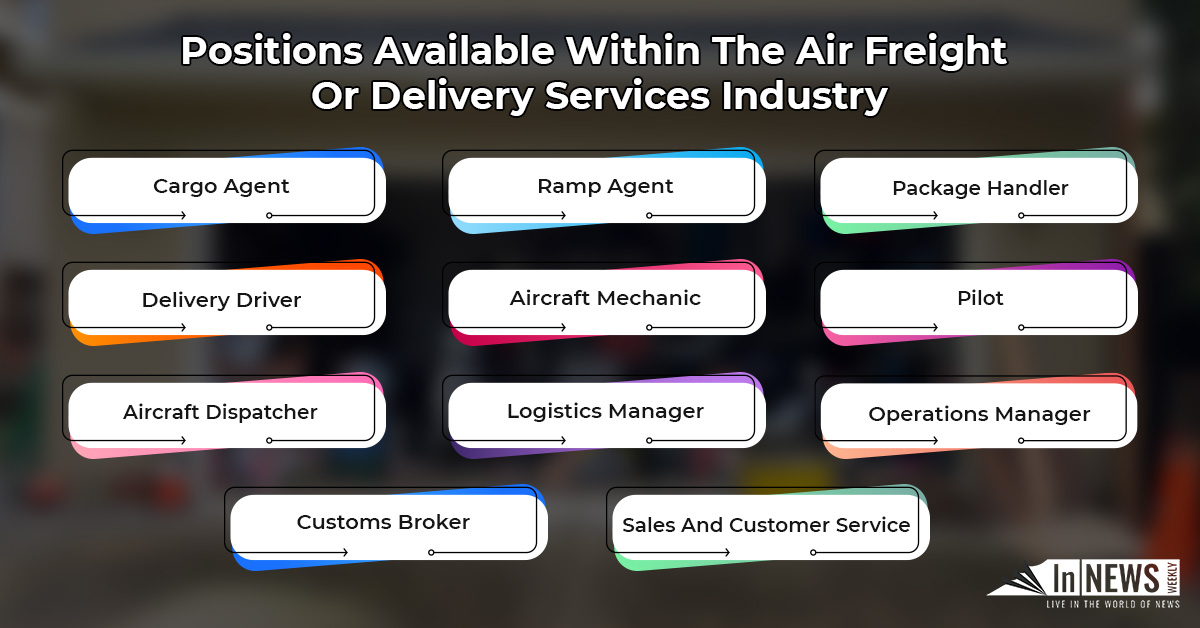
There are many different jobs in air freight and delivery services. Some people load planes, some fix them, and others plan how packages travel. Everyone works together to make sure goods arrive safely and on time.
- Cargo Agent: Handles shipment documents, plans logistics, and talks to customers.
- Ramp Agent: Loads and unloads cargo from planes and operates ground equipment.
- Package Handler: Sorts, scans, and moves parcels inside hubs and warehouses.
- Delivery Driver: Collects and delivers packages on local routes.
- Aircraft Mechanic: Repairs and maintains cargo planes so they are safe to fly.
- Pilot: Flies cargo planes and makes sure goods are transported safely.
- Aircraft Dispatcher: Plans flight routes and monitors weather and fuel with the flight crew.
- Logistics Manager: Oversees transporting, storing, and distributing goods.
- Operations Manager: Runs the daily work of an air freight facility to keep shipments on schedule.
- Customs Broker: Clears international shipments through customs and handles duties and paperwork.
- Sales And Customer Service: Sells air freight services to businesses and helps customers with questions and orders.
Qualifications To Enter Air Freight/Delivery Services
The skills, training, and certificates you need depend on the job. Some roles need only a high school diploma, while others require a degree or a federal license.
Education
Many entry-level jobs, such as package handler, ramp agent, and delivery driver, ask for a high school diploma or have no formal education requirement. Logisticians typically need a bachelor’s degree, and airline pilots usually have one as well. Going to college helps you learn more about business, logistics, or aviation, which opens the door to management roles.
Training And Certification
Licensed roles have strict requirements. Airline pilots need an FAA airline transport pilot certificate, which generally requires 1,500 hours of flight time. Aircraft mechanics usually complete an FAA-approved program and earn an Airframe and Powerplant (A&P) certificate. Air traffic controllers train at the FAA Academy. Workers who handle hazardous cargo need dangerous goods training, and many drivers need a commercial driver’s license for larger vehicles.
Experience
Experience is how most people move up. If you start by loading packages and work reliably for a few years, you learn the operation and become trusted to lead a team. Experience helps you handle problems, work safely, and make good decisions, which is what employers look for in supervisors and managers.
Skills
You need to communicate clearly, solve problems quickly, and pay close attention to detail so packages don’t get lost or damaged. Comfort with scanners, tracking software, and data is increasingly important as hubs become more automated. If you work with international shipments, a second language is a real advantage.
Salary And Job Growth Outlook For Careers In This Field
The long-term outlook is positive, but 2026 is a year of mixed signals. On the demand side, IATA reported that global air cargo demand achieved a record volume in 2025, with full-year demand up 3.4% over 2024. In June 2026, IATA cut its forecast for 2026 to just 0.2% growth, or about 71.7 million tonnes, citing disruption from the conflict in the Middle East. Monthly results have still been strong at times, with demand up 8.5% year over year in June 2026.
On the jobs side, BLS projections for 2025 to 2035 show growth in every major occupation in the field: 18% for logisticians, 8% for airline pilots, 7% for delivery drivers, 6% for aircraft mechanics, and 4% for hand laborers and material movers. Average pay across the couriers and messengers industry was $25.57 an hour in August 2026.
The main caution is restructuring at large carriers. UPS’s job cuts in 2025 and 2026 show that parcel networks are consolidating facilities and automating sorting. New technology such as drone delivery, warehouse robotics, and digital logistics tools is removing some manual tasks while creating jobs in maintenance, data, and operations planning.
Responsibilities And Working Conditions For Professionals In This Field
Daily tasks and working conditions vary widely by role. Many jobs are fast-paced, deadline-driven, and run outside a typical 9-to-5 schedule, including nights, weekends, and holidays.
Cargo Agents
Cargo agents make sure shipments are booked, documented, and sent on time. They usually work in offices or warehouses, where they check paperwork, talk to customers, and plan shipments. Evening and weekend shifts are common because cargo moves every day. The job rewards people who are organized and careful with details.
Ramp Agents
Ramp agents work outside at airports, loading and unloading cargo from aircraft. They move heavy freight and operate ground equipment in all weather, from summer heat to snow. They wear protective gear and work as a team to turn aircraft around quickly, which makes the role physically demanding but essential.
Aircraft Mechanics
Aircraft mechanics inspect, repair, and maintain planes so they are safe to fly. They work in hangars or on the airfield, often overnight when aircraft are on the ground. They use specialized tools, follow strict FAA rules, and sign off on work that keeps crews and cargo safe.
Pilots
Cargo pilots fly goods between airports, often overnight so packages arrive the next morning. They monitor weather, routes, fuel, and aircraft systems, and they may spend several days away from home on a trip. The job takes years of training and constant focus on safety.
Logistics And Operations Managers
Logistics and operations managers make sure goods reach the right place on time. They usually work in offices or operations centers, where they plan routes, track shipments, manage teams, and solve problems when something goes wrong. Long hours are common during peak periods such as the holiday season.
Factors Affecting Job Availability In Air Freight Delivery Services
Several forces decide how many jobs the industry offers in any given year:
- Economic Conditions: When the economy is strong, people and businesses ship more, which creates jobs. When it slows, hiring slows too.
- Global Trade And Geopolitics: Trade policy, tariffs, and conflicts change where cargo flows. IATA lowered its 2026 cargo forecast because of disruption linked to the Middle East conflict.
- E-Commerce And Large Customers: Online shopping drives parcel volume, but shifts by big shippers matter. UPS’s decision to carry less Amazon volume is a major reason for its job cuts.
- Technology And Automation: Robots and automated sorting reduce some manual jobs while creating roles in maintenance, tracking systems, and data analysis.
- Regulation: Safety, training, and environmental rules affect how many qualified workers are available and what skills employers need.
- Fuel Costs And Sustainability: Fuel prices affect airline costs and capacity, and the push for cleaner aviation is creating jobs in sustainable fuel and efficiency.
How To Get A Job In Air Freight/Delivery Services
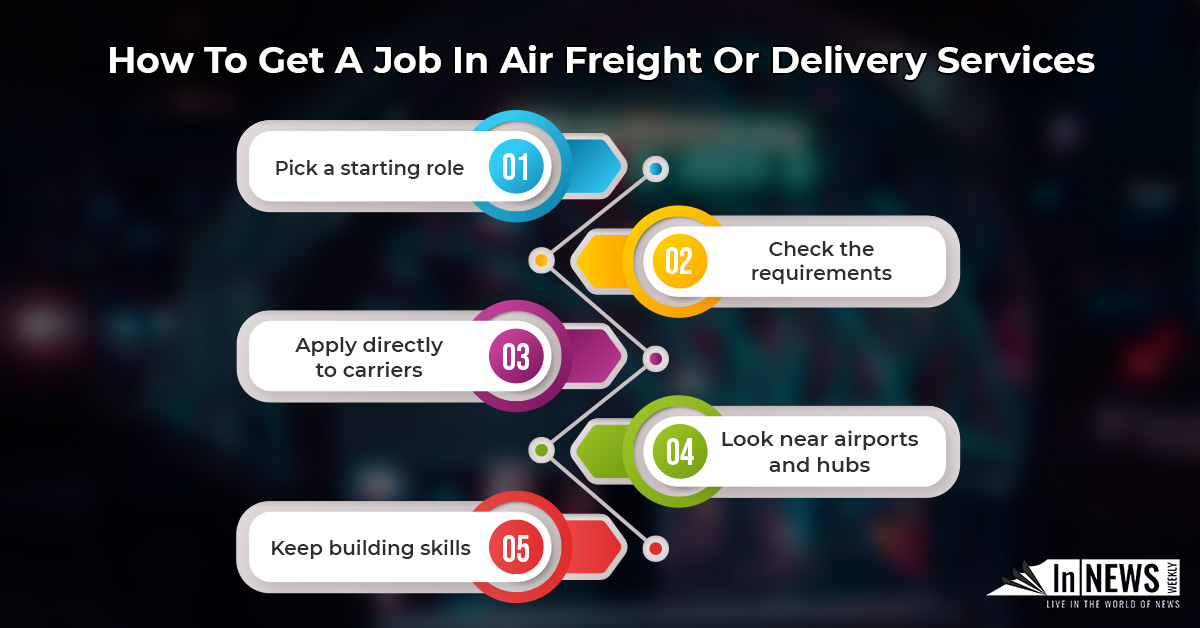
- Pick a starting role. Decide whether you want hands-on work (package handler, ramp agent, driver), a technical path (mechanic, pilot), or an office path (cargo agent, logistics).
- Check the requirements. Confirm the education, license, age, and background-check rules for that role before you apply.
- Apply directly to carriers. FedEx, UPS, DHL, Amazon, and cargo airlines post openings on their own career sites, and many hire seasonal staff before the holiday peak.
- Look near airports and hubs. Most jobs cluster around major cargo airports and sorting hubs, so widen your search to those areas.
- Keep building skills. Use employer tuition programs and certifications to move from entry-level work into better-paid technical or management roles.
How Many Jobs Are Available In Air Freight/Delivery Services: Conclusion
Air freight and delivery services employs roughly 1.66 million people in the United States and offers a wide range of careers, from loading aircraft and delivering packages to flying cargo planes and managing global supply chains. Pay ranges from about $38,000 for entry-level material movers to more than $230,000 for airline pilots.
The industry remains essential to the world economy, and the long-term job outlook is positive, especially in logistics, piloting, and aircraft maintenance. Hiring in 2026 is uneven, so focus on roles and skills with strong projected growth. If you want a career that is active, practical, and offers clear ways to move up, air freight and delivery services is worth a serious look.
Frequently Asked Questions
1. How Many Jobs Are Available In Air Freight/Delivery Services?
About 1.66 million people work in the two closest U.S. industries: roughly 568,500 in air transportation and 1.09 million in couriers and messengers, based on preliminary BLS data for September 2026. Key occupations such as pilots, aircraft mechanics, and logisticians each have thousands of projected openings every year through 2035.
2. What Does Air Freight Do?
Air freight moves goods by airplane from one place to another so that packages, food, medicine, and equipment arrive quickly and safely. It supports global trade and lets businesses deliver time-sensitive items in days instead of weeks.
3. What Does An Air Freight Forwarder Do?
An air freight forwarder arranges how goods travel by air on behalf of shippers. Forwarders choose routes and airlines, book cargo space, prepare shipping and customs documents, and track shipments until they are delivered.
4. What Is The Job Description Of Air Freight Logistics?
Air freight logistics workers plan, organize, and manage how goods move by air. They select routes, coordinate with airlines and warehouses, handle shipping details, track packages, and solve problems so deliveries arrive safely and on time.
5. How Big Is The Air Freight Industry?
It is very large. IATA reported that global air cargo demand reached a record volume in 2025, up 3.4% from 2024, and it expects about 71.7 million tonnes of cargo in 2026. In the United States, air transportation and couriers and messengers together employ about 1.66 million people.
6. Do You Need A Degree To Work In Air Freight/Delivery Services?
Not for most entry-level jobs. Package handlers, ramp agents, and delivery drivers usually need a high school diploma or less. Logisticians typically need a bachelor’s degree, and pilots, aircraft mechanics, and air traffic controllers need FAA training and certification.
