

How Much Does A Plumber Make? Factors, Average Salaries & Tips
Plumbing is one of the most reliable and high-demand trades, providing a career path that blends hands-on expertise with strong financial rewards. Whether you’re just beginning to explore the field or are already in training, one of the first questions you may ask is how much does a plumber make.
Earnings can differ significantly based on factors such as experience, location, specialization, and type of employment. Still, plumbing consistently offers excellent income potential and abundant opportunities for career growth, making it an appealing choice for those seeking stability, skill development, and long-term professional success in the skilled trades industry. In this article, we explore salary ranges, factors that influence pay, and ways to maximize earnings.
Factors That Affect A Plumber’s Salary
A plumber’s income isn’t set in stone—multiple factors influence earnings. Understanding these variables can help you set realistic expectations and plan a pathway toward higher pay.
Experience Level
Just like many trades, plumbing salaries grow significantly with experience. Entry-level apprentices often start with hourly wages that reflect their training status, while journeyman plumbers and master plumbers command higher rates thanks to their skill level, certification, and proven track record.
Location
Where you work can dramatically impact how much you earn. Urban areas and states with a higher cost of living tend to offer higher wages to offset expenses, while rural regions might have lower rates but also less competition.
Specialization
Plumbers who focus on niche services—such as medical gas systems, industrial piping, or eco-friendly water solutions—often charge more than those handling only general residential repairs. Specialized certifications can make you more marketable and boost your pay.
Type Of Employment
Some plumbers work for large companies or unions, others operate as independent contractors, and many run their own businesses. Each setup affects income. Union plumbers often benefit from negotiated wage rates, while self-employed plumbers can set their own prices but must cover expenses like tools, insurance, and marketing.
Average Plumber Salaries In The U.S.
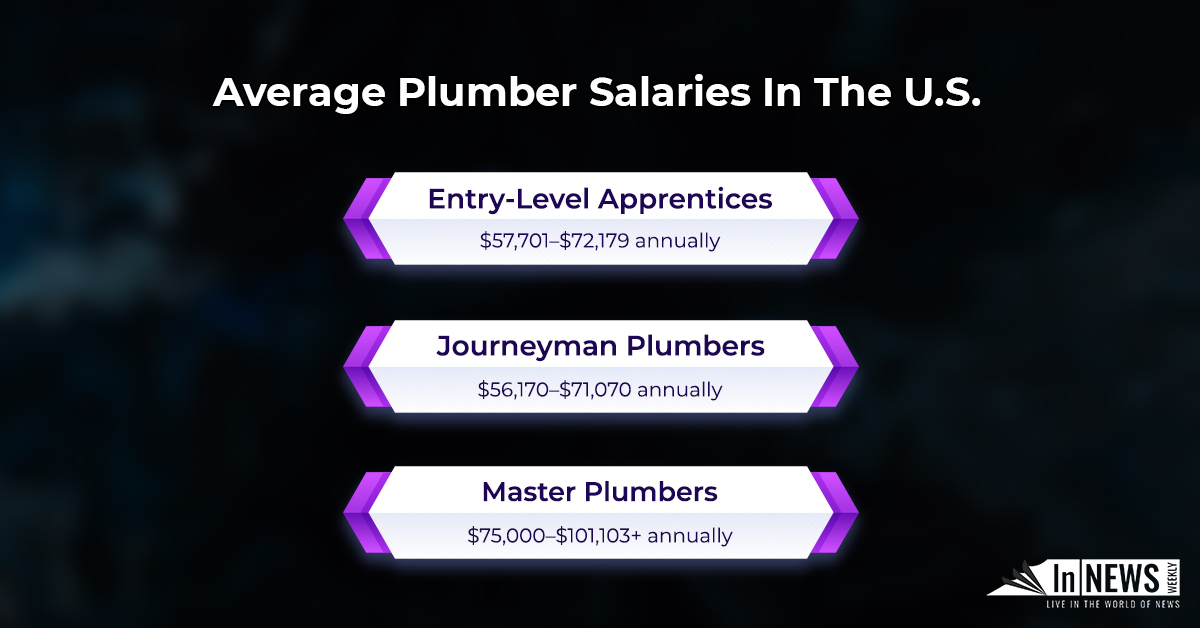
While numbers vary year to year, U.S. Bureau of Labor Statistics (BLS) data and trade organization reports give a clear range. As of recent estimates:
- Entry-Level Apprentices: $57,701–$72,179 annually (average around $65,847)
- Journeyman Plumbers: $56,170–$71,070 annually (median about $64,930)
- Master Plumbers: $75,000–$101,103+ annually (top earners exceeding $100K)
Hourly wages typically range from $27–$36, depending on the region and skill level. Unionized plumbers often earn higher rates and receive additional benefits like healthcare, retirement contributions, and paid time off.
High-Paying States For Plumbers
While you can earn a comfortable living as a plumber anywhere in the U.S., certain states stand out for their higher pay:
- Illinois – Known for strong union representation and competitive wages.
- Alaska – High wages reflect the challenging working environment and cost of living.
- Massachusetts – Steady demand and high living costs drive wages upward.
- New York – Opportunities in both residential and commercial sectors with strong pay.
- Oregon – Growing population and infrastructure needs create high demand.
In these states, experienced plumbers can earn well above the national median, sometimes exceeding six figures with overtime and specialized work.
Comparing Plumbing To Other Trades
Plumbing holds its own against other skilled trades. For example, electricians and HVAC technicians have similar median wages, but plumbers often have more consistent work year-round because plumbing systems are essential in all seasons. Additionally, the wide range of services—from installing new systems to emergency repairs—helps ensure steady demand.
Career Growth Opportunities In Plumbing
One of the most attractive aspects of the plumbing field is upward mobility. Here’s how many plumbers progress in their careers:
- Apprenticeship – Paid, on-the-job training combined with classroom instruction.
- Journeyman – Licensed to work independently under state regulations.
- Master Plumber – Requires additional experience and passing rigorous exams.
- Business Owner – Running your own plumbing company, hiring staff, and setting your own rates.
Specializing in high-demand areas like green plumbing, backflow prevention, or industrial systems can further boost earning potential.
Union Vs. Non-Union Plumbing Work
Union membership can significantly influence earnings. Union plumbers typically receive higher wages, better benefits, and stronger job security. However, non-union plumbers may have more flexibility in choosing projects and setting their schedules. Each path has its pros and cons, and your choice will depend on your career goals, location, and personal work preferences.
Self-Employment And Earnings Potential
Self-employed plumbers often have the highest earning potential, but they also carry the most responsibility. Running a plumbing business means handling marketing, client acquisition, billing, taxes, and overhead costs in addition to the actual trade work. Many plumbers transition into self-employment after gaining years of experience and building a solid client base.
A self-employed plumber in a busy metropolitan area, offering emergency services and specialized expertise, can realistically earn over $150,000 annually. However, this requires strong business skills alongside technical proficiency.
Benefits Beyond Salary
While income is important, plumbing offers additional benefits that contribute to overall job satisfaction:
- Job Stability – Plumbing systems are essential, meaning steady demand even during economic downturns.
- Low Barrier to Entry – No four-year degree required; apprenticeships allow you to earn while you learn.
- Variety of Work – From residential repairs to large-scale construction projects, the work remains diverse and engaging.
- Opportunities Nationwide – Skills are transferable to any location, increasing flexibility.
The Future Of Plumbing Salaries
The BLS projects steady growth for plumbing jobs over the next decade, driven by new construction, aging infrastructure, and water conservation initiatives. As technology advances, plumbers trained in smart home water systems and sustainable plumbing solutions will be in particularly high demand.
Wages are likely to continue rising, especially in regions with labor shortages and high construction activity. Apprentices entering the field today can expect competitive pay from the outset, with clear pathways to higher income as they gain experience.
Tips For Maximizing Your Plumbing Income

If you want to earn more in this trade, consider these five strategies:
- Get Certified in Specialized Areas – Backflow prevention, green plumbing, or medical gas installation.
- Work Overtime and Offer Emergency Services – Higher rates for urgent jobs can significantly boost earnings.
- Build a Strong Reputation – Word-of-mouth referrals and online reviews can lead to higher-paying clients.
- Negotiate for Better Pay – In union settings or when changing jobs, don’t be afraid to negotiate wages.
- Start Your Own Business – Once experienced, self-employment can offer unlimited income potential.
Conclusion
Plumbing is more than just fixing leaks—it’s a highly skilled profession with solid earning potential, strong job stability, and opportunities for growth. For those wondering how much does a plumber make, the answer depends on experience, location, specialization, and employment type. From apprentices earning a modest wage to master plumbers running successful businesses, the income range is wide but consistently competitive.
With the right training, certifications, and career choices, plumbers can enjoy not only a stable income but also the satisfaction of providing essential services that keep homes, businesses, and communities functioning every day.
