

Is Consumer Durables A Good Career Path? Jobs, Salaries And Outlook (2026)
Quick Answer
Yes, consumer durables is a good career path for people who want well-paid work with large, established companies making products such as cars, appliances, electronics, and furniture. Durable goods manufacturing employs about 7.9 million people in the United States, and many of its core roles pay well above average, including industrial engineers (median $102,440), mechanical engineers ($104,110), and marketing managers ($166,790). The main drawback is that demand is cyclical, so hiring slows when consumers cut back on big purchases.
Key Takeaways
- Consumer durables are goods built to last three years or more, such as vehicles, appliances, electronics, and furniture.
- Americans were spending at an annual rate of about $2.38 trillion on durable goods in July 2026, according to Bureau of Economic Analysis data.
- U.S. durable goods manufacturing employed about 7.87 million people in July 2026.
- The fastest-growing roles are in supply chain and engineering: logisticians (18% projected growth from 2025 to 2035), industrial engineers (12%), and mechanical engineers (11%).
- The sector is cyclical. Sales fall when interest rates rise or the economy weakens, and tariffs and supply chain costs add uncertainty.
If you’re asking, “Is consumer durables a good career path?”, you’re not alone. Many students and professionals want to know whether this sector offers stability, growth, and long-term value. The short answer is yes, as long as it matches your skills and goals. This guide covers what the industry is, what the jobs pay in 2026, where the growth is, and what the real downsides are, so you can make an informed decision.
What Are Consumer Durables?
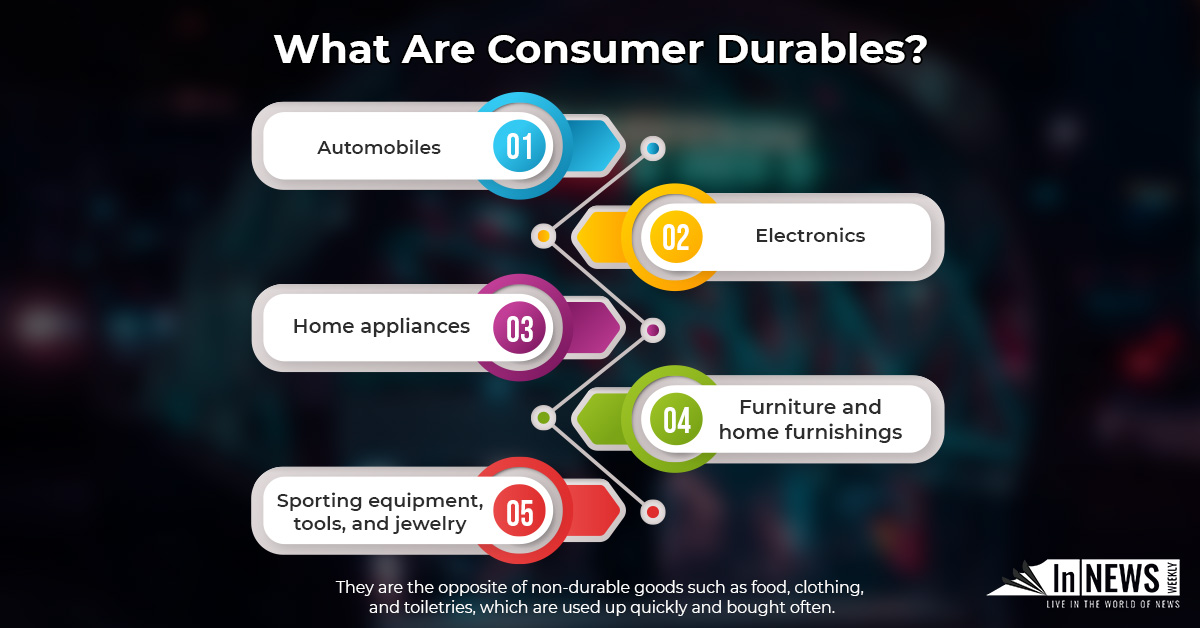
Consumer durables are long-lasting goods that people buy infrequently and use over time, typically for three years or more. Examples include:
- Automobiles (for example, Toyota and Ford)
- Electronics (for example, Apple, Samsung, and Sony)
- Home appliances (for example, Whirlpool and LG)
- Furniture and home furnishings
- Sporting equipment, tools, and jewelry
They are the opposite of non-durable goods such as food, clothing, and toiletries, which are used up quickly and bought often.
Who Is This Guide For?
This article is for:
- Students or recent graduates exploring career paths
- Professionals considering a career switch
- Anyone weighing the long-term prospects of a job in consumer goods
If you’re trying to work out whether this field fits your strengths, the sections below walk you through the essentials. Once you have a direction, a written career development plan will help you match your goals to what the industry offers.
Industry Outlook And Market Size
Consumer durables is one of the largest parts of the economy. According to the U.S. Bureau of Economic Analysis, which publishes monthly consumer spending data, Americans were buying durable goods at a seasonally adjusted annual rate of about $2.38 trillion in July 2026. On the production side, U.S. durable goods manufacturing employed about 7.87 million people that month, based on Bureau of Labor Statistics payroll data.
Three trends are shaping hiring in 2026:
- Smarter products. Connected appliances, electric vehicles, and AI-enabled devices are increasing demand for engineers, software specialists, and data analysts.
- Supply chain redesign. Tariffs, shipping costs, and the push to source closer to home have made logistics and procurement skills more valuable. Logistician jobs are projected to grow 18% from 2025 to 2035.
- Automation and sustainability. Factories are adding robotics and cutting energy use, which favors workers with technical, process-improvement, and environmental compliance skills.
Keep in mind that demand for durables is cyclical. Because these are large purchases that people can postpone, sales slow when interest rates are high or the economy weakens, and hiring follows.
Is Consumer Durables A Good Career Path?
Pros
- Strong salary potential, with engineering, supply chain, and management roles paying well above the national median
- A wide range of roles, from product design and engineering to marketing, sales, and logistics
- Large global employers with structured training and promotion paths
- An innovation-driven industry working on electric vehicles, smart home technology, and connected devices
- Tangible results, since you can see and use the products you help create
A career in consumer durables can offer both financial rewards and professional growth. You’ll find opportunities to work with leading global brands and help shape products people use every day.
Cons
- Cyclical demand, which means layoffs and hiring freezes are more common in downturns than in everyday consumer goods
- High competition for top roles at well-known brands
- A need for both technical and business skills
- Long or irregular hours in sales, logistics, production, and product launches
- Automation risk in routine roles; customer service representative jobs, for example, are projected to decline 5% by 2035
The field rewards continuous learning and adaptability. If you prefer a slower, more predictable environment, some parts of this industry may not suit you.
Career Paths In Consumer Durables
1. Product Development
Product developers create and improve durable goods. The work combines research and development, user testing, and close collaboration with engineering teams. Typical roles include industrial designer, mechanical engineer, and product manager. This path suits people who enjoy problem-solving and want to build innovative, reliable products.
2. Sales & Marketing
Sales and marketing teams persuade consumers and retailers to buy the product. The work involves market research, branding, pricing, and campaign management. If you have strong communication skills and an interest in consumer behavior, this could be a good fit. Marketing and sales managers are among the best-paid people in the sector.
3. Supply Chain Management
Supply chain professionals coordinate sourcing, manufacturing, inventory, shipping, and delivery so that products reach customers on time and at the right cost. Demand here is strong: the BLS logisticians profile projects 18% job growth from 2025 to 2035 and about 26,600 openings a year. Attention to detail and strong planning skills are essential.
4. Customer Support & Field Service
These teams handle questions, repairs, warranty claims, and returns after the sale. The roles call for patience, empathy, and a detailed understanding of how the product works. Entry-level support jobs are declining as chatbots and self-service tools spread, but skilled field service technicians and support managers remain important for brand loyalty.
5. Sustainability & Innovation
Sustainability roles help companies reduce their environmental impact through better materials, energy efficiency, recycling programs, and regulatory compliance. If you care about the environment and want to influence how products are made, this is a meaningful and growing path.
What Do Consumer Durables Jobs Pay?
Salaries vary widely by role and experience. The table below uses the latest Bureau of Labor Statistics figures: median annual pay from May 2025 and projections for 2025 to 2035. The numbers cover each occupation across all industries, so pay at a specific consumer durables company may be higher or lower.
| Role | Median Pay (May 2025) | Projected Growth (2025–35) | Openings Per Year |
|---|---|---|---|
| Marketing Manager | $166,790 | 6% | 36,300 (advertising, promotions, and marketing managers combined) |
| Sales Manager | $148,270 | 4% | 47,300 |
| Industrial Production Manager | $126,060 | 3% | 17,000 |
| Mechanical Engineer | $104,110 | 11% | 17,800 |
| Industrial Engineer | $102,440 | 12% | 23,100 |
| Industrial Designer | $83,910 | 2% | 2,800 |
| Logistician (Supply Chain) | $82,320 | 18% | 26,600 |
| Market Research Analyst | $78,760 | 7% | 82,000 |
| Manufacturing Sales Representative | $72,080 | 0% | 123,400 |
| Customer Service Representative | $44,770 | -5% | 289,500 |
Management roles pay the most but usually require several years of experience first. For early-career candidates, engineering, supply chain, and market research offer the best mix of pay and growth.
Top Companies In Consumer Durables
| Company | Sector | Known For |
|---|---|---|
| Apple | Electronics | Smartphones, laptops, wearables |
| Samsung | Electronics And Appliances | TVs, smartphones, home appliances |
| LG | Electronics And Appliances | Smart appliances, TVs |
| Sony | Electronics | Gaming consoles, cameras, audio |
| Toyota | Automotive | Reliability and hybrid technology |
| Ford | Automotive | Trucks, SUVs, electric vehicles |
| Whirlpool | Home Appliances | Washers, dryers, kitchen appliances |
| Haier (GE Appliances) | Home Appliances | Refrigerators, ranges, laundry |
Large companies like these typically offer strong benefits, formal training, and chances to work internationally. If one part of the sector interests you most, our guides on whether auto manufacturing is a good career path and whether electrical products is a good career path go deeper into those industries.
Required Skills And Qualifications
Education
- A bachelor’s degree in business, engineering, marketing, industrial design, or supply chain management for most professional roles
- A high school diploma for many production, sales, and customer service jobs, with training provided on the job
- An MBA or a professional certification, such as Six Sigma, PMP, or a supply chain credential, to move into management faster
Technical Skills
- Excel, ERP systems, and CRM software
- Data analysis and demand forecasting tools
- CAD software for design and engineering roles
- Working knowledge of AI tools used for forecasting, quality control, and customer support
Employers value candidates who can interpret data and use technology to make operations faster and cheaper.
Soft Skills
- Communication and negotiation
- Analytical thinking
- Adaptability and problem-solving
- Teamwork across design, engineering, sales, and operations
These skills help professionals work across teams and respond to changing conditions. Clear communication and sound judgment often separate top performers from the rest.
Real-World Challenges
- Keeping up with rapid changes in technology and consumer expectations
- Managing supply chain disruptions and rising input costs
- Balancing cost-efficiency with innovation
- Dealing with tariffs, trade rules, and product regulations in different countries
- Riding out slow periods when consumers delay big purchases
Success in consumer durables takes resilience and strategic thinking. The industry changes quickly, and professionals need to stay informed about trends, regulations, and the wider economy.
How To Start A Career In Consumer Durables
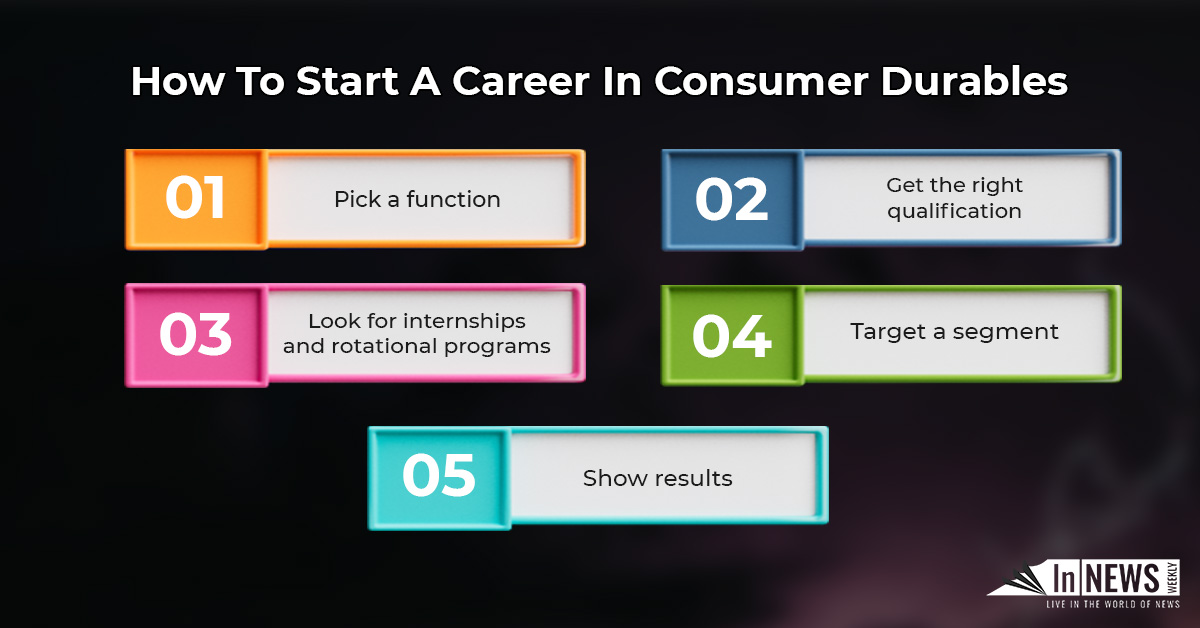
- Pick a function. Decide whether you are drawn to design and engineering, sales and marketing, supply chain, or customer support.
- Get the right qualification. Match your degree or certification to that function, and add data and software skills.
- Look for internships and rotational programs. Large manufacturers recruit many graduates through these routes.
- Target a segment. Automotive, electronics, appliances, and furniture have different employers and locations, so focus your search.
- Show results. On your resume, use numbers such as costs saved, sales achieved, or defects reduced to prove your impact.
Final Verdict
If you’re motivated by innovation, enjoy fast-moving environments, and want a career built around tangible products and large, well-resourced employers, consumer durables is a rewarding path. It isn’t for everyone. You’ll need adaptability, curiosity, and solid technical or business skills, and you should be prepared for the ups and downs of a cyclical industry. For people with those qualities, the pay and opportunities are substantial.
The strongest prospects in 2026 are in supply chain, engineering, and data-driven marketing roles. Build skills in those areas and you will be well placed in a sector that shapes everyday life.
FAQs
Is Consumer Durables A Good Career Path?
Yes, for most people with technical or business skills. The sector offers well-paid roles in engineering, supply chain, sales, and marketing at large global companies. The main downside is that demand is cyclical, so jobs are less secure during economic slowdowns.
What Are Examples Of Consumer Durables?
Consumer durables are goods designed to last three years or more. Common examples are cars, refrigerators, washing machines, televisions, smartphones, laptops, furniture, and power tools.
What Is The Highest-Paying Job In Consumer Durables?
Outside the executive level, marketing managers and sales managers are among the highest paid, with median pay of $166,790 and $148,270 a year according to May 2025 BLS data. Industrial production managers, mechanical engineers, and industrial engineers also earn median pay above $100,000.
Do You Need A Degree To Work In Consumer Durables?
Not always. Many production, retail sales, and customer service jobs require only a high school diploma. Engineering, design, marketing, and supply chain roles usually require a bachelor’s degree, and an MBA or professional certification helps with promotion to management.
Is The Consumer Durables Industry Stable?
It is large and long-established, but it is cyclical. People delay buying cars, appliances, and electronics when money is tight or interest rates are high, so sales and hiring rise and fall with the economy more than they do for everyday goods like food.
What Companies Are In The Consumer Durables Field?
Well-known consumer durables companies include Apple, Samsung, LG, and Sony in electronics, Toyota and Ford in automotive, and Whirlpool and Haier, which owns GE Appliances, in home appliances.
